

LoL Tier List Rankings
Rank LoL options from S to D, compare the choices that fit your goals, and share a tier list built around your own point of view.











LoL Tier List for a more useful draft conversation
The LoL Tier List is a reference built from submitted rankings, and your draft priorities can differ. Use it to compare the jobs your next pick must handle: absorbing lane pressure, creating an opening, protecting an ally, or threatening a side lane. Start with the responsibility your team needs most, then compare familiar candidates around the relevant tier boundary. This turns a broad ranking into a manageable conversation about how your composition will actually play.
What each band adds to the conversation
This LoL Tier List uses S, A, B, C, and D.
Useful interpretation | Draft question | |
|---|---|---|
| S | The submitted ordering expresses strong confidence. | Can I execute the pick's role with this team? |
| A | A favorable choice that still invites comparison. | Which conditions make this preferable to another familiar option? |
| B | A middle placement can hide several specialized jobs. | Does one of those jobs solve our actual problem? |
| C and D | The reference assigns lower overall priority. | Would matchup knowledge or a deliberate composition change my view? |
Bring the LoL Tier List into a focused review
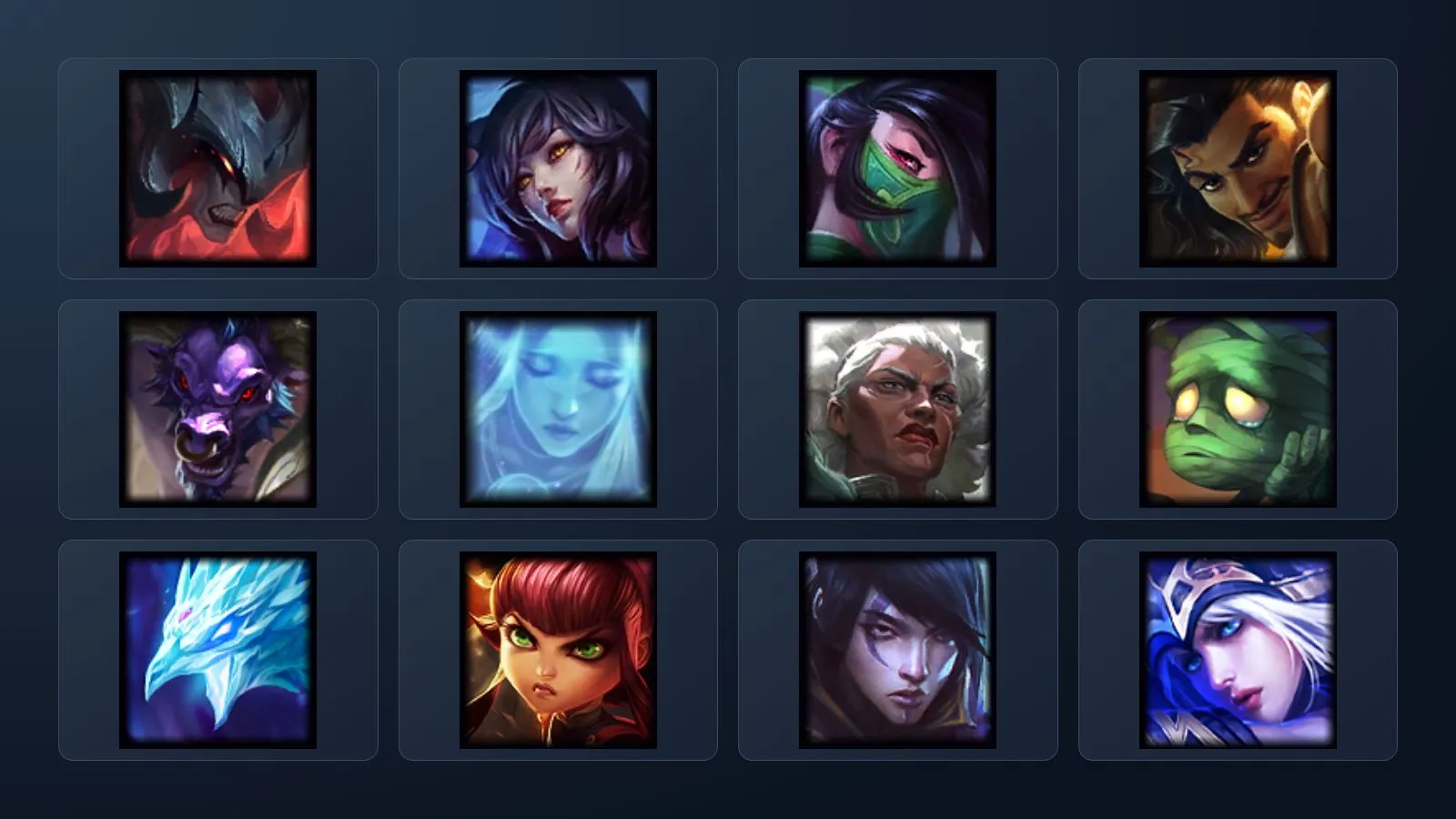
Choose a small group of relevant portraits rather than comparing the entire pool at once. A narrower discussion helps teammates distinguish a disagreement about strength from a disagreement about the job being evaluated.
Choose the role
01Start with the position and responsibilities you intend to play. Avoid comparing a familiar champion in its normal job with another option in a role you have barely practiced.
Read the surrounding picks
02Look for available follow-up, reliable protection, and the team's preferred engagement distance. Consider whether a champion's contribution complements those tools or simply duplicates them.
Explain the departure
03When remixing the reference, connect a changed placement to a matchup, a composition, or a learning goal. That explanation makes the new order easier to evaluate after a match.
Lane comfort and later responsibility are different tests
A comfortable lane can make a champion feel dependable, yet the team may need a different contribution once players begin moving together. Conversely, a difficult opening does not always erase a clear later role. Examine both phases before concluding that the reference is too high or too low on an option. Ask how you will contribute when behind as well as when ahead. Can you create a useful opening without an early lead? Do your teammates understand when you want to fight? These questions turn the LoL Tier List into a practical conversation about decisions. They also prevent a highlight from one favorable game from becoming an oversized claim about every draft.
Three questions for a more focused draft
Lane plan
Choose how you intend to handle the early waves and trades. A clear lane plan helps you enter later fights with resources and a useful understanding of your role.
Team contribution
Look at the range and timing your teammates prefer. Decide who begins the fight, who follows, and who protects the players that need space to contribute.
Practice goal
Keep a manageable pool with responsibilities you understand. Choose one recurring decision to improve so you can connect a champion change to something observable in the next match.
Choose a manageable pool for the next session
For a player learning a role, a useful shortlist should include options with understandable responsibilities. You want to know when to trade, when to give ground, and what your team expects in a grouped fight. Mechanical ambition is reasonable, but changing to an unfamiliar high-row portrait can make it harder to tell whether a mistake came from the pick or from execution. Choose one familiar response for a difficult lane and one clear responsibility for grouped fights. Those reference points help you judge whether a new pick makes your next decision easier to understand.

Build a draft discussion around the first useful fight
Imagine the first moment your team needs to move together. Decide how the group approaches, where it wants the opponent to stand, and who can act if the initial opening fails. Look for tools that connect across that sequence. A pick can feel comfortable in lane while leaving the group with a difficult engagement plan. Another can demand patience early and offer a role that becomes easier to understand once teammates begin grouping. Return to the LoL Tier List after a match and review one moment when the composition struggled. Perhaps several players waited for someone else to initiate, or the team committed before a vulnerable ally reached a useful position. Explain which missing job a different pick would cover. If the tools were already available, practice the sequence with your existing pool. When sharing a remix, include the intended position and team plan so another player can read the order through the same draft question.